




There’s a phase everyone goes through. You feel motivated, you set a goal, maybe even plan things out, and for a few days, everything clicks. Then suddenly, your focus fades. You start skipping days, pushing things forward, and before you realize it, you’re back at square one.
I’ve seen this pattern repeat more times than I can count. The problem isn’t that people lack ambition. It’s that they rely too much on motivation and not enough on systems. Staying focused on goals isn’t about feeling driven every day; it’s about building something that keeps you moving even when you don’t feel like it.
Why Focus Fades Even When You Care About Your Goals

Most people think losing focus means they’re lazy or inconsistent. That’s not the real issue.
Focus fades because your brain naturally resists effort. When something requires long-term commitment without immediate reward, your mind starts looking for easier alternatives, scrolling, distractions, anything that gives quick satisfaction.
Another reason is the unclear structure. If your goal feels too big or undefined, your brain doesn’t know where to start. That confusion turns into procrastination.
The Shift That Actually Changes Everything
If you want to understand how to stay focused on goals, you need to stop relying on motivation completely.
Instead, shift to identity and systems.
When you think, “I need to work on my goal today,” it feels like a task. But when you think, “This is what I do,” it becomes part of your identity.
That shift sounds simple, but it changes how you approach consistency.
And this is where your daily structure matters more than you think. Something as simple as a morning routine for student’s mental motivation can quietly set the tone for your entire day. Not because it’s magical, but because it removes the friction of deciding how to start.
Build Systems That Remove Decision-Making
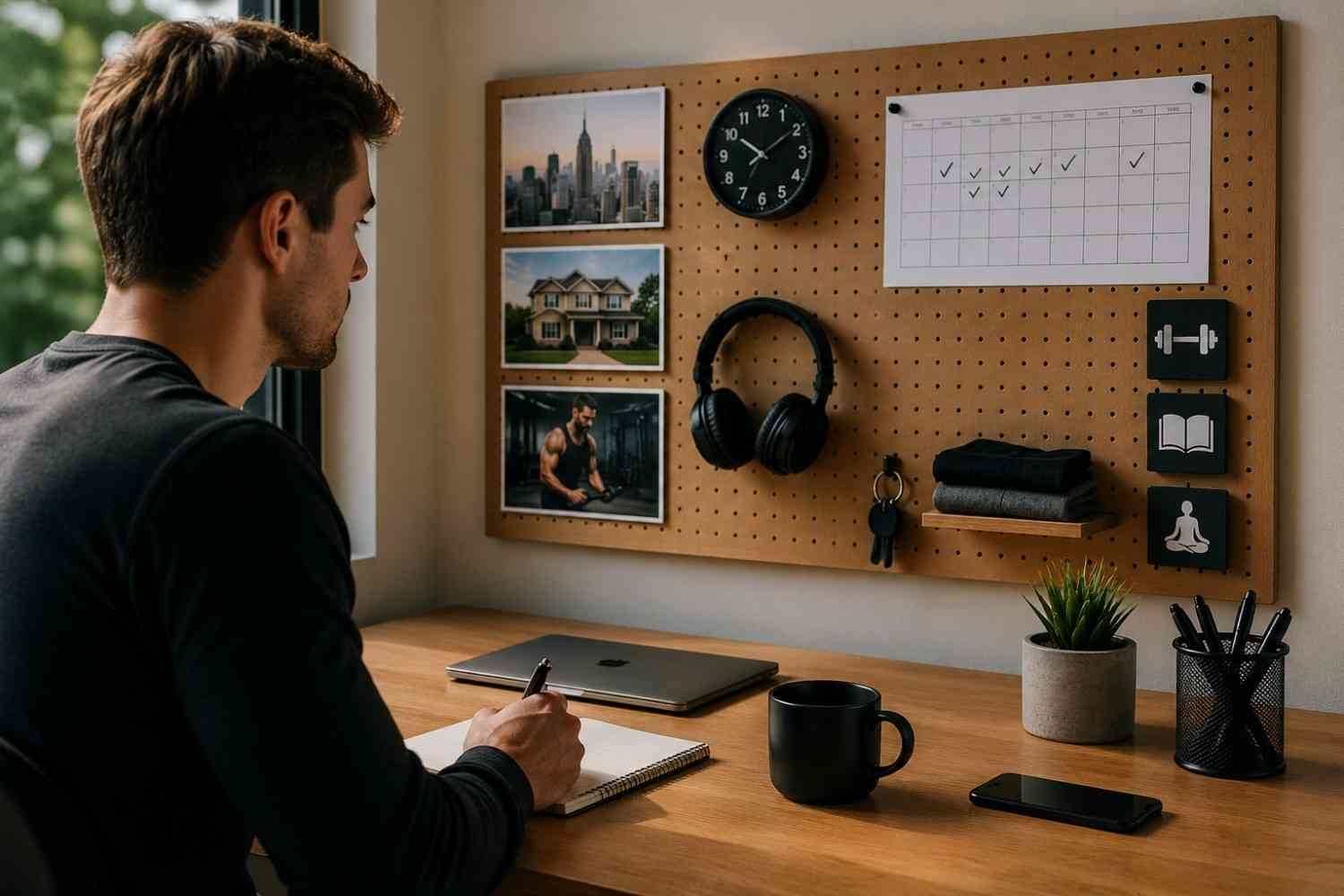
One of the biggest reasons people lose focus is decision fatigue. Every time you have to decide when or how to work on your goal, you increase the chances of skipping it.
Instead, build systems.
Time Blocking Your Work
Assign a fixed time slot for your goal. It doesn’t have to be long, but it has to be consistent.
When your brain knows, “This is the time we do this,” it stops negotiating.
Break Goals Into Micro-Steps
Big goals feel overwhelming because they lack immediate clarity.
Instead of:
“I want to get fit.”
Think:
“I will exercise for 10 minutes today.”
Small actions reduce resistance. And once you start, continuing becomes easier.
Train Discipline Like a Skill, Not a Trait
Discipline isn’t something you either have or don’t have. It’s something you build.
And like any skill, it improves with repetition.
Start Uncomfortably Small
Most people fail because they start too big.
If your goal is too demanding from day one, your brain pushes back. That’s why starting with something almost too easy works better.
Five minutes of work is better than zero. And consistency builds momentum.
Use “If-Then” Planning
You already know distractions will happen. The mistake is not preparing for them.
Instead, decide in advance:
- If I feel distracted → I will take a short pause and reset
- If I feel like skipping → I will do at least one small task
This removes hesitation in the moment.
Fix Your Environment Before Fixing Yourself

You don’t need more willpower; you need fewer distractions.
Your environment shapes your behavior more than your intentions do.
Remove Friction From Good Habits
- Keep the tools you need easily accessible
- Create a dedicated workspace
- Reduce the steps required to start
Add Friction to Distractions
- Keep your phone away while working
- Use website blockers if needed
- Limit easy access to time-wasting apps
The goal is simple: make the right choice easier than the wrong one.
The Role of Accountability and Recovery
No one stays perfectly consistent. That’s unrealistic.
What matters is how quickly you return after slipping.
Don’t Wait to “Restart Fresh”
Most people think, “I’ll start again tomorrow” or “next week.”
That delay is what kills consistency.
If you miss a day, reset immediately, even if it’s just a small action.
Use Accountability Smartly
Sharing your goal with someone adds pressure in a good way.
It doesn’t have to be public. Even one person who knows what you’re working on can increase your commitment.
A Simple System That Actually Works

If you want a structure that’s realistic, stick to this:
- Define one clear goal
- Break it into daily actions
- Assign a fixed time
- Start small
- Remove distractions
- Track consistency, not perfection
That’s it. No complicated frameworks needed.
FAQs: How to Stay Focused on Goals and Build Long-Term Discipline
1. How do I stay focused on goals every day?
You don’t rely on daily motivation. You create a system where actions happen automatically through routines and fixed schedules.
2. Why do I lose focus after starting strong?
Because motivation fades. Without structure or systems, your brain shifts toward easier, more rewarding distractions.
3. How long does it take to build discipline?
It varies, but consistency matters more than time. Small actions repeated daily build discipline faster than intense but inconsistent effort.
4. What is the best way to avoid distractions?
Control your environment. Remove triggers, limit access to distractions, and create a workspace designed for focus.
Wrapping It Up
Staying focused on goals isn’t about pushing yourself harder every day. It’s about making the process easier to follow consistently. When your system is clear, and your environment supports your actions, focus becomes less of a struggle and more of a habit.
You don’t need perfect discipline. You need repeatable actions. And once those actions become part of your routine, everything else starts to feel less forced and more natural.