




There was a time when my calendar looked full, but nothing actually got done. Classes, assignments, social plans, everything was there, yet I still felt behind. The problem wasn’t a lack of time. It was how that time was being used. Most students hit this phase at some point, especially when deadlines start stacking and expectations rise.
What changed things wasn’t working harder. It was learning how to manage energy, priorities, and mental space alongside academic tasks. Real-time management isn’t about squeezing more into your day. It’s about creating a system that helps you stay consistent without burning out halfway through the semester.
Why Time Management Feels So Hard In Student Life

Student life doesn’t come with clear boundaries. One hour you’re attending a lecture, the next you’re scrolling your phone, and suddenly the day is gone. Unlike structured jobs, there’s a constant need to decide what to do next, and that decision fatigue quietly drains your focus.
On top of that, there’s pressure from all sides: grades, expectations, social life, and sometimes even part-time work. This is where poor planning turns into stress. If you’ve ever searched for how to manage stress in college, chances are the root issue wasn’t just stress it was unclear priorities and scattered time.
Start With A Clear Plan, Not A Long To-Do List
A long to-do list looks productive but often creates overwhelm. What works better is assigning time to tasks instead of just listing them.
Time-blocking is one of the simplest ways to do this. Instead of saying “study biology,” you define a slot like 9:00 AM to 11:00 AM for it. This removes the constant question of “what should I do next?” and gives your day structure.
Another powerful approach is the Eisenhower Matrix. It forces you to separate what actually matters from what just feels urgent. Many students spend hours on low-impact tasks while ignoring important work until the last minute. Once you start prioritizing correctly, your workload instantly feels more manageable.
Work With Your Energy, Not Against It

Not every hour of your day is equal. Some hours you feel sharp and focused, while others feel slow and distracted. Most students ignore this and try to study randomly, which leads to frustration.
Energy mapping changes that. You identify when you’re naturally most focused and schedule difficult subjects during that time. For many, this is the morning. For others, it’s late evening.
When you align tasks with your energy levels, studying becomes less exhausting and more effective. You’re not forcing productivity, you’re working with your natural rhythm.
Use Focus Techniques That Actually Work
Sitting for hours doesn’t guarantee productivity. In fact, long, unfocused sessions often lead to burnout.
The Pomodoro technique is popular for a reason. You study in focused intervals, usually 25 to 50 minutes, followed by short breaks. This keeps your brain fresh and prevents mental fatigue from building up.
Another method that works surprisingly well is the “Eat the Frog” approach. You start your day with the hardest or most uncomfortable task. It removes the mental weight early and makes the rest of the day feel lighter.
And then there’s the Two-Minute Rule. If something takes less than two minutes, do it immediately. Small tasks piling up are often what create that constant feeling of being behind.
Create A Daily Structure That Supports Your Life
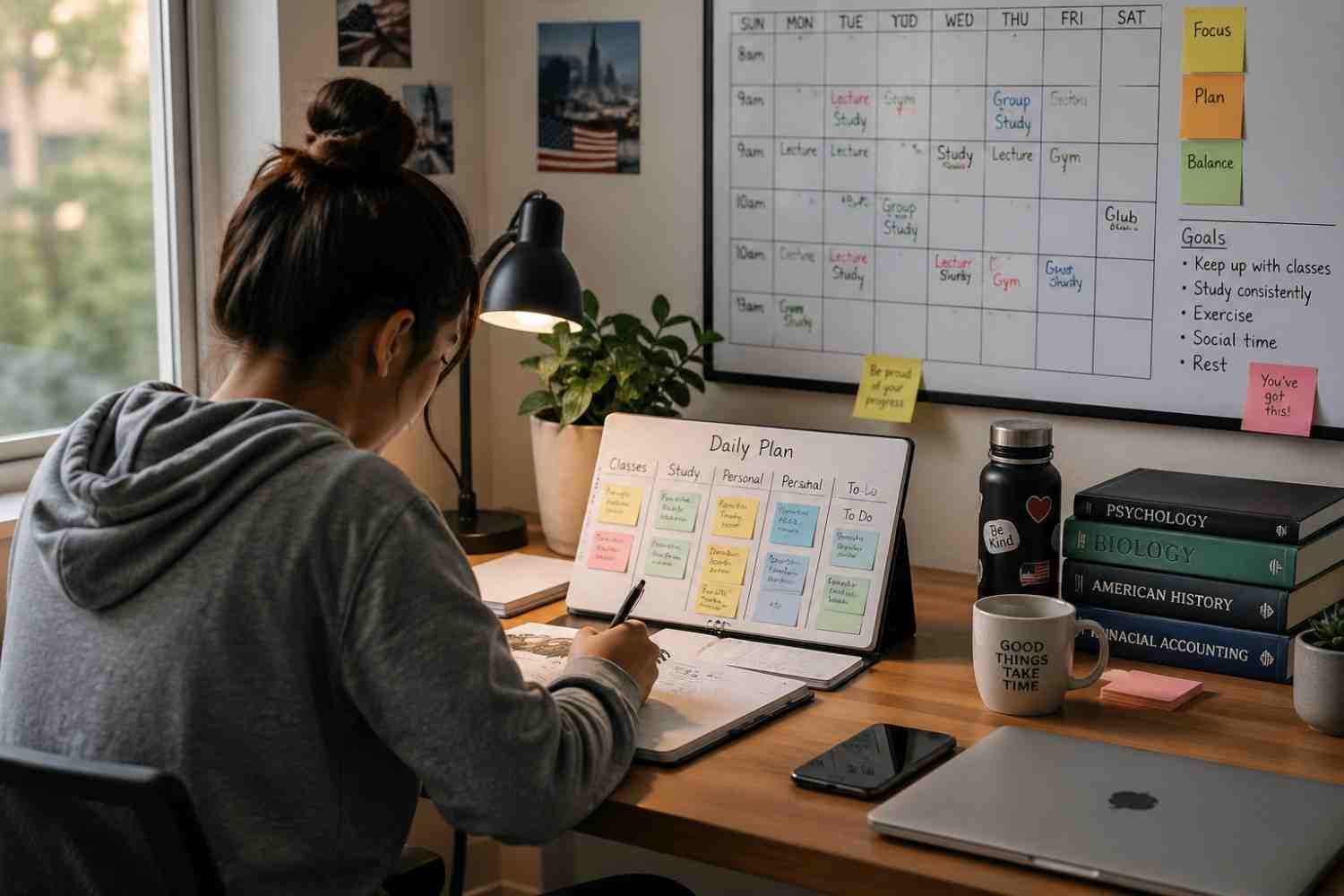
A balanced routine matters more than a perfect one. One simple framework that works well is the 7-8-9 rule:
- 7 hours for sleep
- 8 hours for study or productive work
- 9 hours for everything else
This isn’t about strict control. It’s about making sure your life doesn’t become all work and no recovery. Without balance, even the best productivity systems fall apart.
Buffer time is another thing students underestimate. Tasks almost always take longer than expected. Leaving small gaps between activities prevents your entire day from collapsing when one thing runs late.
Protect Your Time as It Matters
One of the hardest skills to build is saying no. Not every plan, event, or request deserves your time, especially during high-pressure periods.
This doesn’t mean cutting off your social life. It means being intentional. Use social time as a reward after completing important tasks. It creates a healthier relationship between work and relaxation.
Digital distractions are another major issue. A quick scroll can easily turn into an hour. Using app blockers during study sessions can make a noticeable difference. Sometimes, productivity isn’t about doing more; it’s about removing what’s pulling your attention away.
Practical Habits That Make A Real Difference

Sometimes it’s the small changes that have the biggest impact. A few habits that consistently help:
- Plan your next day the night before
- Keep your study space clean and distraction-free
- Limiting multitasking reduces efficiency
- Review your progress weekly instead of daily
- Take breaks without guilt; they’re part of productivity
These aren’t complicated, but they’re effective when done consistently.
Frequently Asked Questions: Practical Time Management Tips For Students Juggling Classes And Life
1. How many hours should a student study daily?
It depends on workload and goals, but most students benefit from 4–6 focused hours of study. Quality matters more than quantity. Short, focused sessions are more effective than long, distracted ones.
2. What is the best time management technique for students?
There isn’t one “best” method, but time-blocking combined with the Pomodoro technique works well for most students. It provides structure while maintaining focus and preventing burnout.
3. How can students avoid procrastination?
Breaking tasks into smaller steps and starting with easy actions helps reduce resistance. Removing distractions and using deadlines also improves consistency.
4. How do you balance study and personal life?
Balance comes from planning both intentionally. Schedule study time and personal time separately, and treat both as equally important. Avoid letting one completely take over the other.
Wrapping It All Together
Time management as a student isn’t about becoming perfectly organized overnight. It’s about understanding what works for you and building a system around it. Some days will still feel messy. Some plans won’t go as expected. That’s normal. What matters is having a structure you can return to when things start slipping.
Once you start prioritizing your time with intention, everything feels a little more in control. Not perfect but manageable, and that’s what actually makes the difference.